
Physical Therapy for Knee Arthritis Pain: A Practical Guide
You wince on the stairs, shorten your walks, and reach for an ice pack most evenings. The knee may feel stiff when you first stand, then sore after errands, exercise, or a long period of sitting. Over time, avoiding movement can make the joint less capable of handling the activities you still need and want to do.
Physical therapy for knee arthritis pain works by improving the support around the knee, building tolerance for activity, and teaching you how to manage load. It doesn't regrow worn cartilage, and it can't promise that every ache will disappear. It can, however, reduce pain and improve function through a structured combination of exercise, education, activity modification, and carefully selected hands-on care.
The most important distinction is between the durable core and the adjunct layer. Progressive strengthening and aerobic conditioning create the lasting physical changes. Manual therapy, heat, ice, and electrical stimulation may make movement easier, especially early in treatment, but they don't replace the loading work. A realistic program usually requires consistent effort over 6 to 12 weeks, with continued exercise helping preserve the gains.
Why Knee Arthritis Pain Leads People to Try Physical Therapy
A typical new patient doesn't arrive because the knee hurts only during a single activity. They arrive because ordinary life has narrowed. Stairs require a handrail, a grocery trip means planning where to sit, and a short walk becomes something to negotiate rather than enjoy. Some people have already tried rest, ice, over-the-counter medication, or a brace before asking whether therapy can change the situation.
Knee osteoarthritis involves changes inside and around the joint. The cartilage becomes less capable of distributing force, the underlying bone and joint lining may become irritated, and the muscles that support the knee often weaken when pain leads you to move less. The treatment challenge isn't just to soothe the knee. It is to improve how the entire leg accepts and produces force.
That makes physical therapy a practical conservative option before injections or surgery are considered. A therapist can assess quadriceps strength, hip control, walking mechanics, range of motion, balance, and the specific tasks that trigger symptoms. The plan then targets the deficits that make stairs, sit-to-stand movements, walking, or exercise feel difficult.
A realistic expectation: The knee may feel better before it feels normal. Improvement often appears first as easier movement, greater confidence, or better recovery after activity.
The evidence supports exercise-centered care, but adherence matters. A program performed consistently can reduce symptoms and improve function, while an ideal plan left untouched on paper cannot do either. Physical therapy also has limits. It can't reverse structural changes, and severe symptoms, persistent swelling, locking, or major functional loss may require medical reassessment.
How Knee Osteoarthritis Affects the Joint and Why Movement Helps
Clinically, the avoidance cycle often appears as fewer daily steps, slower walking, and longer sit-to-stand times. Cartilage thinning reduces the smooth surface that helps the bones move against each other. The subchondral bone beneath the cartilage can respond to altered stress, while the synovial lining may become irritated. As activity drops, the quadriceps and hip muscles commonly lose strength.
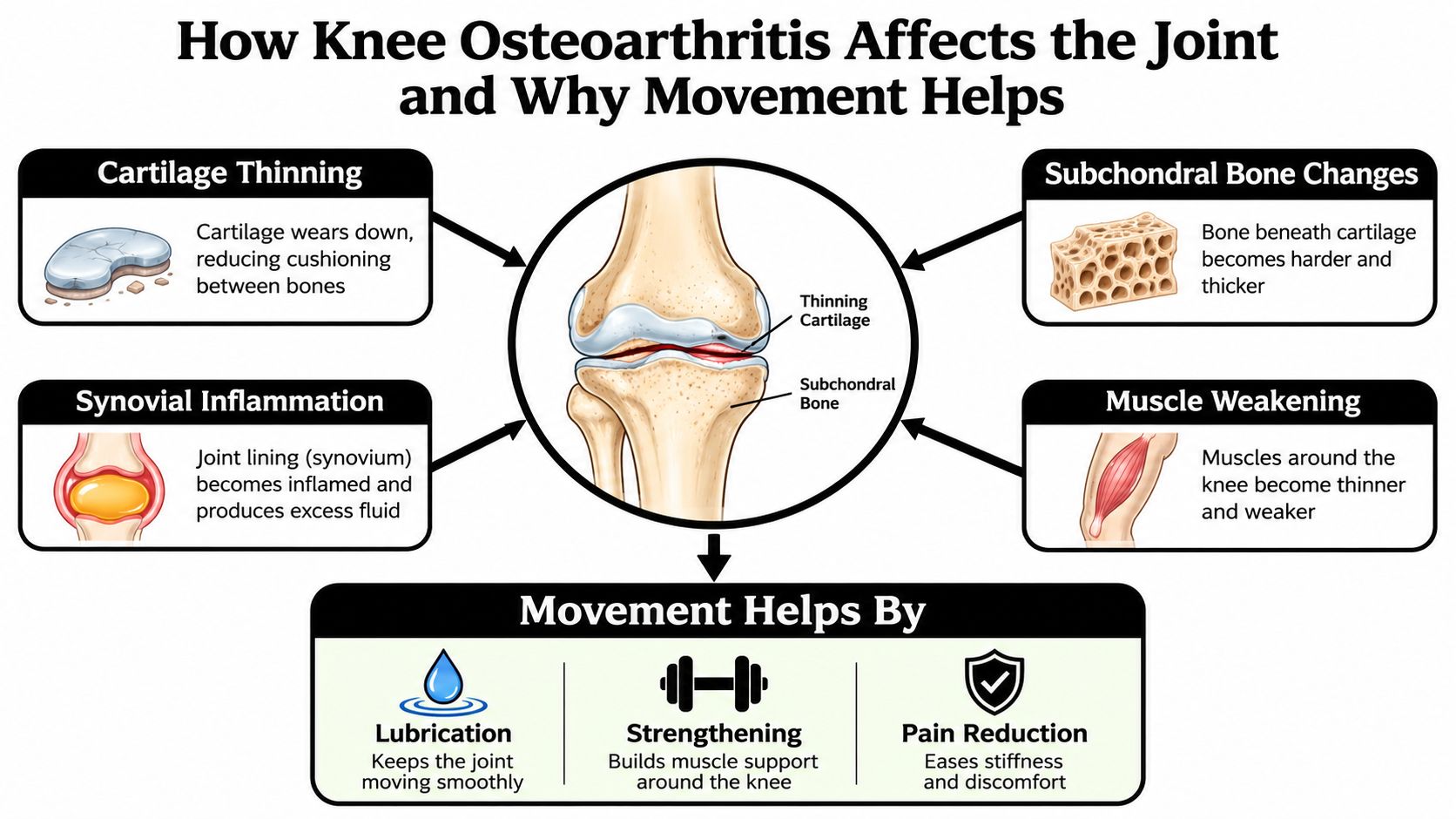
Avoiding stairs, squats, or longer walks reduces the training stimulus for the thigh and hip. The leg then has less capacity for climbing steps, carrying groceries, or rising from a chair. That loss of capacity can make the knee feel less secure and reinforce further avoidance.
Why controlled loading matters
The durable part of physical therapy is progressive exercise dosing. Manual therapy, heat, or other modalities may temporarily reduce stiffness or make movement easier, but strength and activity tolerance depend on repeated loading that the knee can recover from.
A manageable challenge usually produces effort without a sharp increase in pain or swelling. Use perceived exertion as a guide: many strengthening sets should feel moderate rather than maximal, with technique staying controlled through the planned range. If symptoms settle back to their usual level by the next day, increase one variable at a time, such as repetitions, resistance, or range. Hold the dose steady, or reduce it, when pain remains high, swelling increases, or movement quality deteriorates.
Quadriceps strengthening helps the leg control bending and straightening. Hip strengthening supports control during walking and single-leg tasks. Gentle mobility work preserves the movement needed for walking and sitting. Examples are available in this guide to range-of-motion exercises.
Pain does not track structural change in a simple way. Irritated tissues, weakness, reduced confidence, poor sleep, and sensitivity in the pain system can all influence symptoms. A stronger, better-controlled knee may therefore become more useful even when imaging still shows osteoarthritis.
The timeline varies. Strength and movement confidence may change during the early weeks, while meaningful pain reduction commonly develops during the 6 to 12-week treatment window described in guideline-level dosing recommendations. Begin with a repeatable dose, then progress according to recovery rather than forcing maximal exercise.
What the Evidence Says About Physical Therapy as First-Line Care
If knee pain makes stairs, walking, or getting up from a chair harder, physical therapy offers more than temporary symptom relief. Its strongest long-term component is progressive exercise, supported by education and activity changes that help you keep using the knee safely. The American Academy of Orthopaedic Surgeons 2021 guideline, endorsed by the American Physical Therapy Association, identifies exercise, education, and activity modification as central parts of non-arthroplasty knee osteoarthritis management (AAOS guideline information).
Cochrane evidence supports land-based therapeutic exercise for short-term pain relief that may continue for at least 2 to 6 months after formal treatment ends, along with moderate-quality evidence for better physical function. A randomized home-based trial also found meaningful knee pain reduction with exercise programs lasting up to 30 minutes per day, with benefits that could persist for two years (home exercise trial).
The clinical point is straightforward. Exercise is not something to do while waiting for an injection or procedure. It supplies the repeated loading that can improve strength, conditioning, movement tolerance, and confidence. Manual therapy, heat, or other clinic modalities may reduce symptoms enough to make exercise easier, but they do not replace the progressive exercise dose that supports lasting functional change.
A 2025 systematic review and network meta-analysis concluded that aerobic exercise was likely the most beneficial modality for improving pain, function, gait performance, and quality of life in knee osteoarthritis. That finding does not make one program right for everyone. The therapist still has to match the activity, resistance, pace, and progression to the patient's symptoms, strength, goals, and recovery.
How major guidelines generally align
Guidelines from OARSI, ACR, and NICE differ in wording and emphasis, but their practical direction is similar:
- Exercise therapy: use individualized strengthening and aerobic activity as a foundation of care.
- Education and activity modification: help patients understand symptoms, adjust aggravating tasks, and maintain useful activity.
- Passive modalities: use them selectively for short-term comfort or to support participation, rather than treating them as the main intervention.
- Injections or surgery: consider them when pain, functional loss, instability, or disease severity remains substantial despite appropriate nonsurgical care, with medical assessment guiding the decision.
A meta-analysis found that both aerobic and strengthening exercise can improve pain and function, while aerobic and aquatic exercise improved disability outcomes (exercise meta-analysis). In practice, many plans build toward 150 minutes per week of moderate-intensity aerobic activity. Patients may begin with 5 to 10-minute bouts, progress toward 20 to 30 minutes daily, and complete resistance work 2 to 3 non-consecutive days per week as tolerated.
Adherence remains the main limitation. Benefits can fade when exercise stops, and some knees stay highly symptomatic despite a carefully designed program. Severe structural disease, repeated instability, or progressive loss of function may justify a surgical consultation. PT is first-line care for many people, not a promise that surgery will never become necessary.
Core PT Interventions for Knee Arthritis Pain
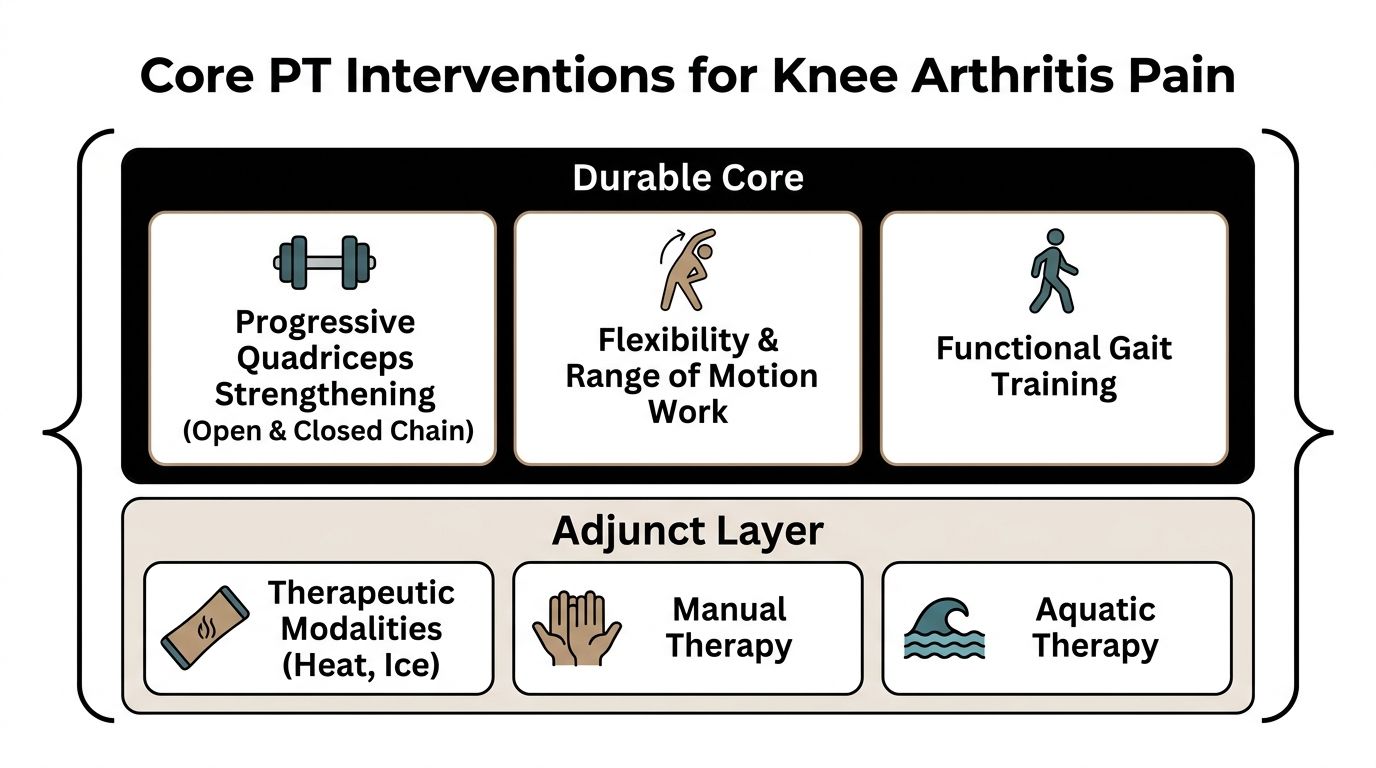
A useful treatment plan has two layers. The first builds capacity. The second helps you tolerate and perform the first layer. Confusing those roles is how patients end up receiving pleasant treatments without enough progressive work to change function.
The durable core
Quadriceps strengthening usually begins with a tolerable version of knee extension. That may include seated knee extensions, sit-to-stand practice, or supported mini-squats. A therapist may start with 2 sets of 8 repetitions and progress toward 3 sets of 12 as symptoms and control allow. The exact load depends on your strength, swelling, range of motion, and recovery response.
Closed-chain tasks, such as shallow mini-squats and step-ups, connect strength to daily life. A step-up can be performed on a low platform before the height or repetition count increases. Hip abductor and external rotator work, such as side-lying or standing resisted exercises, helps control the thigh and pelvis during walking and stair descent.
Aerobic conditioning belongs in the plan as well. Cycling, water walking, or level-surface walking can build endurance with less impact than activities that repeatedly jar the knee. The broader evidence supports progressing toward 20 to 30 minutes most days, within a tolerable intensity.
The adjunct layer
Manual therapy may include patellar mobilization or tibiofemoral glides when stiffness or pain limits exercise. Evidence suggests it works best as an adjunct, not a stand-alone treatment. In a multicenter randomized trial, adding manual therapy or booster sessions to exercise didn't improve the primary one-year outcome beyond exercise alone, although some secondary outcomes suggested short-term benefit (manual therapy trial).
Heat, ice, and neuromuscular electrical stimulation can also have a role. Ice may settle symptoms after activity, heat may help a stiff knee move, and stimulation may assist a poorly activating quadriceps. These tools can make the session more productive, but they don't create the long-term adaptation that progressive loading does.
Clinic frequency is individualized. Some people benefit from visits twice weekly early in care, then taper as their home program becomes reliable. A home program performed several times each week is the part that accumulates between appointments. For additional exercise ideas, see these knee-strengthening exercises.
The following video can help you visualize the type of movement practice often used in knee rehabilitation:
What a Typical PT Course Looks Like From First Visit to Discharge
Your first appointment should feel like an assessment, not a random collection of exercises. The therapist asks when the pain began, which activities aggravate it, how long symptoms last after activity, and what you've already tried. They also review medical history, previous injuries, medications, and the goals that matter to you.
The physical examination usually includes knee range of motion, quadriceps and hip strength, gait observation, balance, and functional tasks. You may perform a sit-to-stand test, a step-down, or a short walking assessment. A therapist may also record a questionnaire such as the KOOS or WOMAC so changes in pain and function can be tracked rather than guessed.
The early phase
During the first few weeks, treatment focuses on reducing irritability and restoring tolerance for basic loading. You may practice gentle strengthening, range-of-motion work, gait changes, and a short aerobic activity. The therapist watches how your knee responds later that day and the following morning, then adjusts the dose.
By the middle phase, resistance and task difficulty increase. The program may include controlled eccentric work for stair descent, balance exercises, deeper functional bending when appropriate, and more demanding step patterns. Supervision often becomes less frequent as you learn how to select the right resistance and recognize an acceptable response.
The final phase
The later sessions should look more like your life. If your goal is gardening, the plan may include kneeling alternatives, repeated squatting from a raised surface, lifting practice, and pacing. If stairs are the priority, the therapist measures control and confidence rather than stopping at pain relief.
Discharge doesn't mean the knee is permanently cured. It means you can perform the program independently, progress it safely, and know what to do during a flare. A written progression and clear return criteria are more valuable than indefinite passive treatment.
Supervised Clinic Visits Versus a Home Exercise Program
The honest answer is that both matter, but they do different jobs. Clinic visits are most valuable when the knee is irritable, the diagnosis needs clarification, or you aren't sure how much discomfort is acceptable. A therapist can change the exercise angle, resistance, range, or rest period immediately instead of leaving you to guess.
Supervision also helps identify poor movement strategies. A patient may believe they are strengthening the thigh but shift most of the work to the hips or the uninjured leg. Small technique changes can make the exercise more comfortable and more specific. Manual treatment or a brief modality may further reduce symptoms enough to allow meaningful practice.
A 2025 NEJM summary reported that people with knee osteoarthritis and knee pain improved in all study groups, while regular therapist visits over three months produced only a small additional benefit over home exercise alone (summary of the NEJM comparison). That finding doesn't make supervised PT pointless. It clarifies the question: who needs professional guidance to start and progress, and who can safely continue independently?
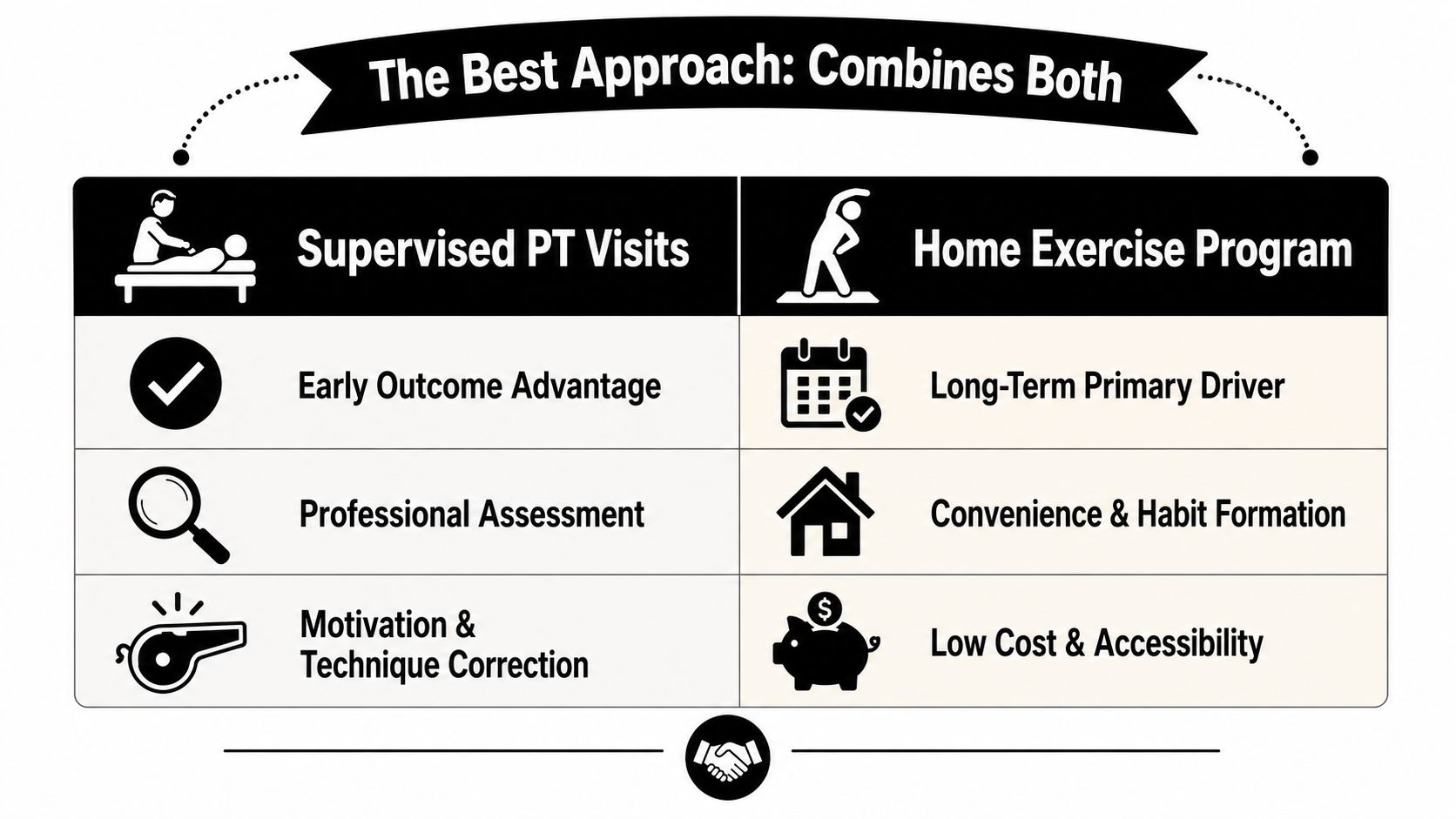
The clinic is the launchpad. The home program is the engine.
A person who attends every appointment but rarely exercises may improve briefly and then plateau. Someone who learns the program, performs it consistently, and returns for progression may need fewer visits while still making durable gains. The right plan may therefore shift from close supervision toward self-management rather than keeping the same appointment schedule indefinitely.
Self-Management Habits That Protect Your Progress Between Visits
A prescribed exercise plan is easier to follow when daily activities do not repeatedly exhaust the knee. A long shopping trip, prolonged standing, or several household tasks completed in one painful burst can leave too little capacity for recovery. Adjust the day so the home program remains practical.
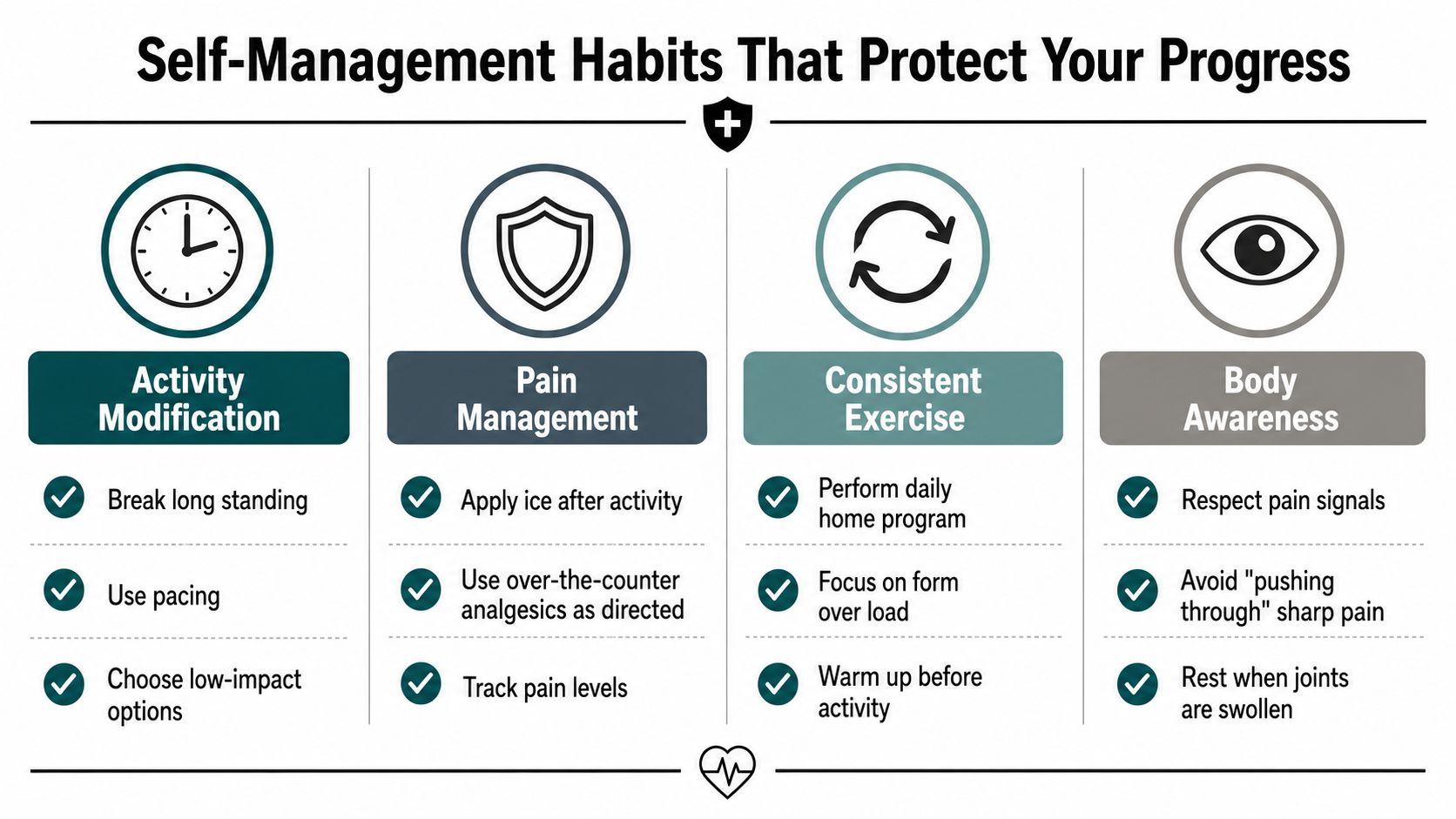
- Break up demanding activity: Split prolonged standing, shopping, or stair use into shorter bouts. Cycling and water walking can maintain aerobic work when repeated impact aggravates symptoms.
- Use pain as information: A mild increase that settles may be acceptable. Sharp pain, pronounced swelling, or symptoms that remain worse the next day indicate that the activity dose needs adjustment.
- Build toward aerobic activity: If you are working toward 150 minutes per week, begin with manageable 10-minute bouts when needed. Add five minutes only when next-day soreness remains at 3/10 or below, then continue increasing gradually (exercise guidance).
- Choose supportive footwear: Wear shoes with secure uppers and soles that are not worn smooth. On uneven ground, slow down and use a handrail or walking aid if your therapist recommends one.
- Plan recovery early: Pause before symptoms peak rather than waiting until the knee is highly irritated. Elevating the leg or applying ice after activity may provide short-term comfort.
- Record patterns: Note the activity, pain level, swelling, and next-day response in a simple diary. Bring these observations to appointments so your therapist can adjust the exercise dose using real-world feedback.
Weight management may matter when body weight contributes to knee loading, but address it as a health decision, not a requirement for receiving care. Sleep position also affects comfort for some people. A pillow between the knees may reduce pressure and make rest easier.
These habits support the home program. They do not replace strengthening, aerobic conditioning, or professional assessment when symptoms fail to follow the expected pattern. Progress comes from maintaining an appropriate exercise dose, then adjusting it when the knee's response shows that the load is too high or too low.
Common Misconceptions and When to Seek Further Care
Myth one, arthritis pain means movement is harmful. Pain can signal that the current dose is too high, but it doesn't automatically mean the joint is being damaged by every movement. Controlled loading is the mechanism that builds strength and improves function.
Myth two, PT only provides short-term relief. Passive care may feel temporary, but exercise can produce benefits that last beyond formal treatment. The gains are more likely to persist when you continue the program rather than treating discharge as the end of rehabilitation.
Myth three, stronger knees require visibly larger muscles. Strength is about force production and control, not appearance. A patient can improve stair control, walking tolerance, and confidence without developing dramatic muscle size.
Myth four, an imaging report decides whether surgery is necessary. Images describe structural findings, but treatment decisions should also consider pain, function, instability, examination findings, and personal goals. A painful-looking scan doesn't establish how well you can move, and a modest scan doesn't invalidate significant symptoms.
Myth five, complete rest is safest during a flare. Short-term reduction of aggravating activity can help, but prolonged inactivity may further reduce capacity. A therapist can substitute easier movement, reduce resistance, or temporarily shorten the range.
Some people also explore supplements or topical products alongside exercise. If you're considering cannabidiol for symptom management, review a medically responsible resource such as best CBD for arthritis and discuss potential interactions with a qualified clinician rather than treating it as a replacement for rehabilitation.
Seek further assessment for persistent locking, catching, or giving way; swelling that continues or worsens; pain at rest or at night that disrupts sleep; sudden loss of motion; or failure to improve after 6 to 8 weeks of consistent PT. These patterns may indicate a meniscal problem, significant effusion, an inflammatory flare, or progression that warrants medical or surgical review. Bring your activity diary, functional goals, exercise history, and response to treatment to the appointment. If surgery becomes appropriate, structured physical therapy after knee surgery can support the recovery process.
MedAmerica Rehab Center provides individualized physical therapy for knee arthritis pain, including strengthening, mobility, balance, walking practice, hands-on care, and selected heat, cold, or electrical modalities. Visit MedAmerica Rehab Center to discuss your knee symptoms, functional goals, and a practical plan for progressing from supervised care to confident home exercise.
MedAmerica Rehab · Deerfield Beach
Talk to a clinician about your pain
Physical therapy, chiropractic, acupuncture and shockwave therapy under one roof, since 1995. Same-day appointments are available.
Mon–Thu 8:00 AM – 6:30 PM · Fri 8:00 AM – 3:00 PM