

How to Treat Whiplash at Home and Recover Faster
So you’ve had a fender-bender or a sudden jolt, and now your neck is paying the price. The first 48 hours after a whiplash injury are critical, and what you do at home can make a huge difference in how quickly you recover.
The old advice was to slap on a neck collar and stay perfectly still. We now know that’s one of the worst things you can do. Immobilizing the neck actually makes it stiffer and can lead to a much longer, more painful recovery.
Instead, think of it as a simple three-part plan: calm the inflammation, manage the pain, and keep your neck moving gently.
Your First Steps After a Whiplash Injury
After an accident, the signs of whiplash might not show up right away. It can take hours or even a full day before you feel that tell-tale neck pain, stiffness, or headache. When it hits, your instinct might be to panic and stop moving altogether.
Don’t. A proactive approach is always better.
Managing Pain and Inflammation
Your first job is to get that initial swelling under control. The rapid back-and-forth motion strains the muscles and ligaments in your neck, and the resulting inflammation is a major source of your pain.
Ice is your best friend. Grab a cold pack or even a bag of frozen peas wrapped in a towel. Apply it to the sorest part of your neck for 15-20 minutes at a time. Do this every couple of hours for the first 48-72 hours. This helps shrink blood vessels, which reduces swelling and provides a nice numbing effect.
Be smart with over-the-counter meds. Nonsteroidal anti-inflammatory drugs (NSAIDs) like ibuprofen (Advil) or naproxen (Aleve) are your go-to here. They tackle both the pain and the inflammation causing it. Just be sure to follow the package directions and check with a doctor or pharmacist if you have other health issues.
This simple visual sums it up perfectly. It’s all about Ice, Meds, and gentle Movement.
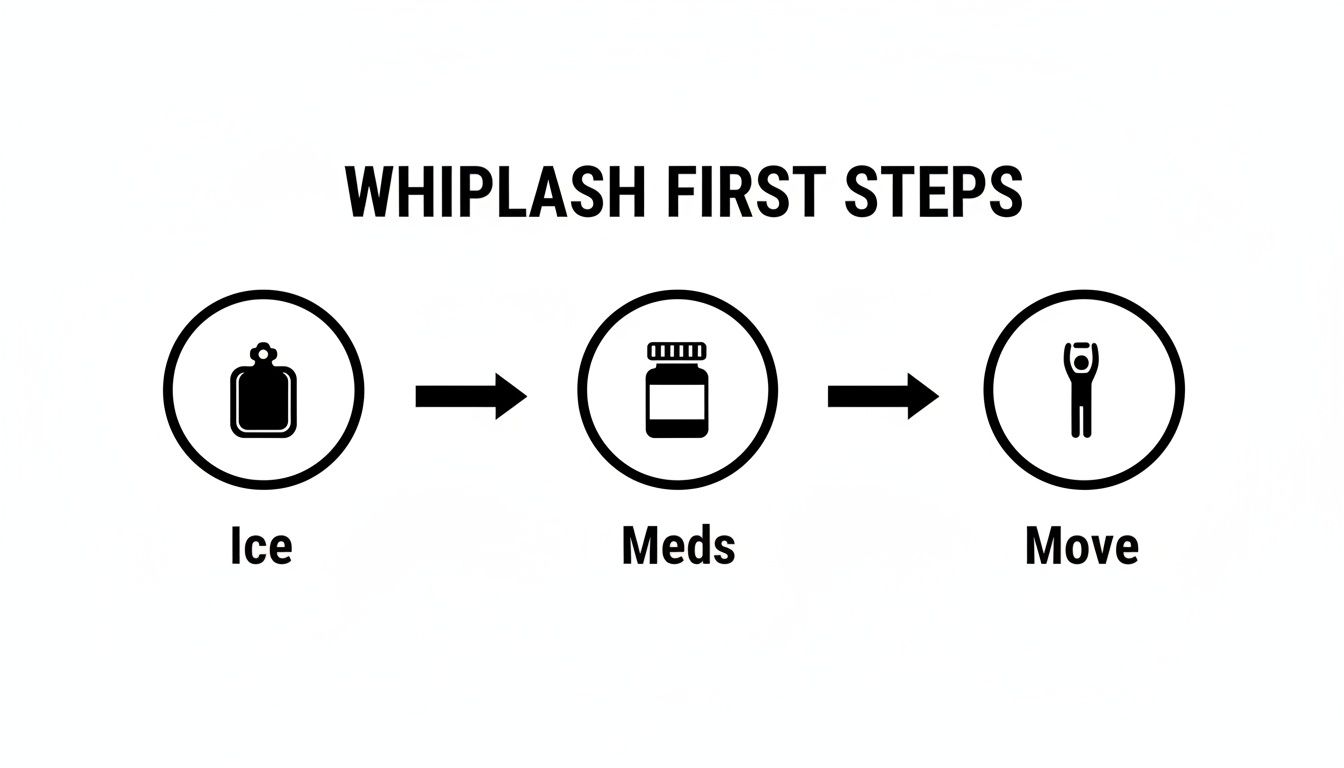
As you can see, the key is a combination of these actions, not just resting and hoping for the best.
When you're in the thick of it, it's easy to do something that feels right but might actually slow down your healing. This table breaks down the immediate do's and don'ts.
Whiplash First Aid Do's and Don'ts in the First 48 Hours
| Action (Do This) | Mistake (Avoid This) |
|---|---|
| Apply ice for 15-20 minutes every few hours. | Using a heating pad (heat can increase inflammation). |
| Take an NSAID like ibuprofen as directed. | Ignoring the pain and trying to "tough it out." |
| Gently move your neck in a pain-free range. | Wearing a neck collar or staying completely still. |
| Try to maintain good posture while sitting and standing. | Slouching on the couch, which strains your neck further. |
| Take breaks from screens (phone, computer, TV). | Pushing through with normal activities and work. |
Sticking to the "Do This" column helps your body start the healing process on the right foot, while avoiding the common mistakes can save you from extra pain and stiffness down the road.
The Importance of Active Recovery
We hear the word "rest," but what your neck really needs is "active recovery." This doesn't mean hitting the gym. It means avoiding any strenuous activity while still encouraging gentle, controlled movement.
Think of a rusty door hinge. If you let it sit, it seizes up completely. But if you work it back and forth gently, it starts to move freely again. Your neck is the same.
The goal isn't to push through sharp pain. Not at all. It's about finding the small, comfortable movements you can do—like slowly turning your head side to side or tilting your ear toward your shoulder. This tells your muscles it's safe to relax, helps maintain flexibility, and actually reduces pain signals.
This isn't just theory; it’s backed by solid evidence. Research has shown that active treatment plans lead to better results and that about 30% of whiplash patients who don't manage it well can end up with chronic pain. Taking these early steps seriously is your best defense against becoming part of that statistic.
Of course, home care is for straightforward cases. If you're experiencing severe symptoms or things aren't improving, you might need a closer look. We break down the next steps in our guide about when you might need an MRI versus an X-ray.
Knowing When to Switch From Ice to Heat

For the first 48 to 72 hours after an injury, ice is your best friend. It helps calm down that initial, angry inflammation. But after that window, your strategy needs to change.
Once the acute swelling starts to go down, the main problem usually shifts to deep, nagging muscle stiffness. That tight, aching feeling in your neck and shoulders calls for a totally different approach. This is where gentle heat comes into play.
Why Heat Is So Important Now
While ice constricts blood vessels to control swelling, heat does the exact opposite. It opens them up, encouraging fresh blood to flow into those tight, sore muscles. This boost in circulation is absolutely vital for the next phase of healing.
Think of it like a delivery service for your injured tissues. This increased blood flow brings a fresh supply of oxygen and nutrients needed for repair. At the same time, it helps flush out the metabolic waste that builds up and contributes to soreness.
Key Insight: After the first two days, your goal changes from managing inflammation with ice to improving circulation and relaxing muscles with heat. Heat delivers the resources your tissues need to repair themselves, which is a critical part of the recovery process.
You can use heat in a few simple ways. A moist heating pad, a warm, damp towel, or even just a long, warm shower can work wonders. The penetrating warmth can make a real difference in your pain levels and how well you can move your neck.
How to Use Heat Safely and Effectively
When you start using heat, the key is gentle, soothing warmth—not scorching heat. You only want to apply it for 15-20 minutes at a time. Any longer can risk skin irritation. Always place a thin towel between the heat source and your skin for protection.
A great real-world trick is to let a warm shower run over your neck and shoulders for a few minutes. While the water is running, try to do some very slow and gentle neck tilts from side to side. The combination of warmth and light movement can feel incredibly relieving.
Here’s a simple schedule you can try:
- In the morning: Use a heating pad or take a warm shower for 15 minutes to work out any stiffness that built up overnight.
- Midday: If you feel your neck tightening up while sitting or working, take a quick 15-minute heat break.
- In the evening: Applying heat right before your gentle stretching exercises helps warm up the muscles, making the movements more effective and comfortable.
Don't be surprised if you have a flare-up of pain and swelling after doing a bit too much, even days later. If that happens, it’s completely fine to switch back to ice for a bit, or even alternate between ice and heat. This blended approach gives you the best of both worlds—calming new inflammation while soothing that underlying muscle tightness.
For a closer look at the science of when and how to use cold therapy, our guide on using ice packs in physical therapy is a great resource.
Gentle Range of Motion Exercises for Early Recovery
After the first 48 hours, once the initial inflammation has started to calm down and you’ve begun using heat to soothe your muscles, it’s time for the most important part of your recovery. This is where you get to take control by gently reintroducing movement.
I know the thought of moving a sore, stiff neck can be scary. But it's the single most effective thing you can do to treat whiplash at home. The old advice to just "rest and wait" has been completely disproven. In fact, keeping your neck still for too long is a recipe for chronic stiffness and a much slower recovery. Your neck muscles and ligaments need gentle reminders of how to do their job correctly.
The Guiding Principles of Movement
Before you try any of these, commit these three rules to memory. They are your North Star for moving safely and effectively.
- Move Slowly and with Control: These are not workout reps. Every movement should be slow and deliberate. Imagine you're trying to move through thick honey.
- Breathe: Don’t hold your breath. Inhale as you get ready to move, and exhale slowly as you perform the stretch. Holding your breath just tenses up your muscles—the exact opposite of what we want.
- Never Push Into Sharp Pain: A gentle pulling or stretching feeling is good. That's the goal. But if you feel a sharp, stabbing, or radiating pain, stop immediately. You've found your limit for today, and that's perfectly okay. Just back off a little until it feels like a comfortable stretch again.
Think of this as a gentle negotiation with your body, not a fight. You're simply coaxing your muscles to relax and remember how to move.
Foundational Exercises for Neck Mobility
Start with these key movements. They target the main directions of motion that get locked up after a whiplash injury. It's much better to do a few reps several times throughout the day than to do one long, painful session. Consistency beats intensity every time.
Neck Rotations (The "Looking Over Your Shoulder" Move)
This exercise is fantastic for restoring your ability to turn your head, something that often becomes very difficult after a car accident or similar injury.
- Sit or stand up tall. Let your shoulders relax down and away from your ears.
- Slowly turn your head to the right, as if you’re trying to look over your shoulder. Go only as far as you can without any sharp pain.
- Hold that gentle stretch for 15-30 seconds, breathing the whole time. You should feel a light pull on the left side of your neck.
- Slowly come back to the center and repeat on the left side.
- Aim for 5-10 repetitions on each side.
A great real-world tip is to use a visual target. If you’re at your desk, slowly turn to look at a picture on the wall to your right, hold, and then turn to look at a window on your left. It makes the movement feel more purposeful and less like a chore.
Lateral Flexion (The "Ear to Shoulder" Tilt)
This one is for the muscles along the sides of your neck, which can get incredibly tight and sore.
- Start in that same tall, relaxed posture.
- Gently tilt your head to the right, bringing your right ear toward your right shoulder.
- Important: Keep your shoulders down. Don't lift your shoulder to meet your ear—that's cheating! The movement should come only from your neck.
- Hold for 15-30 seconds, feeling a nice stretch along the left side of your neck.
- Return to the start and repeat on the other side.
- Complete 5-10 repetitions per side.
Expert Insight: Research overwhelmingly supports starting active movements like these early. One study found that individuals who began active cervical rotations within 96 hours of their injury had significantly less pain six months later compared to those who simply rested with a collar. The evidence is clear: gentle, active recovery leads to better outcomes. Discover more about these pivotal findings on active whiplash recovery.
Chin Tucks (Activating Deep Neck Muscles)
This might be the most important—and most misunderstood—exercise of them all. It doesn't look like much, but it’s a powerhouse for strengthening the deep neck flexor muscles at the front of your neck. These are the muscles that provide stability for your head and neck.
- Sit or stand with your head in a neutral position, looking straight ahead.
- Gently glide your chin straight back, like you're trying to make a double chin. The key is to retract your head back over your shoulders, not tuck your chin down to your chest.
- You should feel a stretch at the base of your skull and a subtle tightening of the muscles in the front of your throat.
- Hold this position for 5 seconds, then relax.
- Repeat 10 times.
Here’s a good mental cue: imagine you're trying to lightly press the back of your head against a car headrest without tilting your head back. It's a very subtle move, but it's incredibly effective for restoring good posture and muscle control. Working these three exercises into your daily routine is a powerful, proactive way to take charge of your recovery right from home.
Better Posture and Sleep Habits for a Faster Recovery

The gentle exercises you do are important, but what you do the other 23 hours of the day matters just as much. The way you hold your body at your desk and how you position yourself at night can either speed up healing or constantly sabotage it.
Think about it. You might do 20 minutes of perfect stretches, only to spend the next eight hours slouching over a computer, putting a constant strain on those same injured neck muscles. This is often where people get stuck. A few simple, conscious tweaks to your daily habits are a non-negotiable part of healing from whiplash.
Fine-Tuning Your Posture During the Day
Your head weighs about 10-12 pounds. When you hold it balanced over your shoulders, your neck muscles aren’t working too hard. But for every single inch your head juts forward, you add another 10 pounds of strain to your neck. It’s easy to see why poor posture is a massive roadblock to recovery.
Let's be honest, modern life is a minefield of postural traps, from laptops to the infamous "text neck."
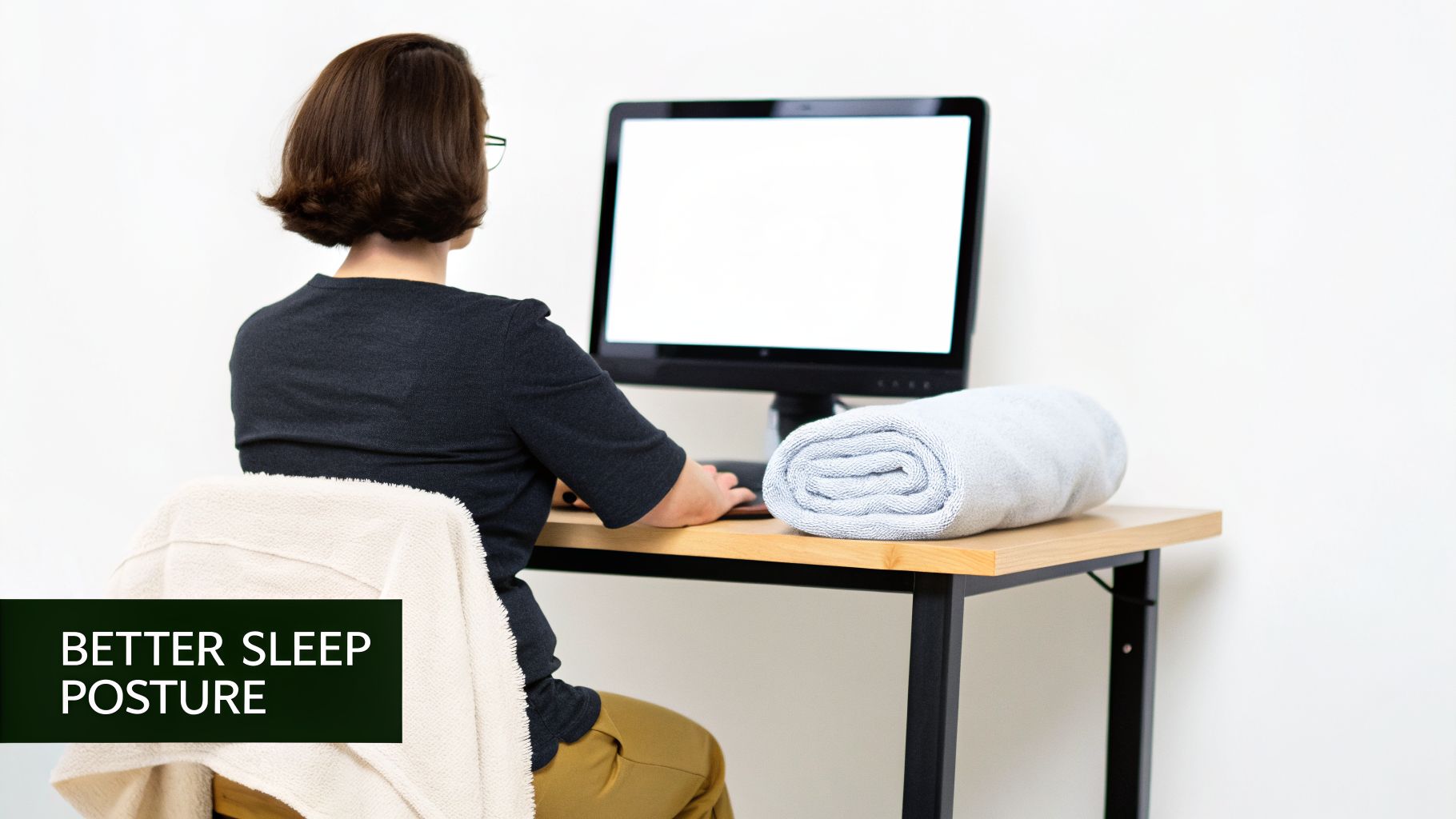
- Rethink Your Workspace: Slide your computer monitor up so the top of the screen is at or just below eye level. This one change stops you from looking down all day. Grab a small towel, roll it up, and place it in the small of your back to encourage an upright posture.
- Fix "Text Neck": Instead of dropping your chin to your chest to look at your phone, get in the habit of lifting your phone to eye level. It feels a little odd at first, but it takes a huge load off your neck.
- Take Micro-Breaks: Set a timer on your phone for every 30-45 minutes. When it goes off, stand up, stretch, and gently roll your shoulders. Just walking to the kitchen for water is enough to reset your posture and give your neck a break.
The key takeaway here is that small, consistent changes have a huge impact. You don’t need a complete life overhaul, but just being aware of your head and shoulder position prevents you from constantly re-injuring your neck throughout the day.
If you’re still struggling to get it right, we’ve got more specific guidance. Our guide on easy exercises you can do at home to improve your posture offers targeted movements that pair perfectly with your whiplash recovery plan.
Finding a Neck-Friendly Sleeping Position
You spend a third of your life asleep, which can either be prime healing time or make things a whole lot worse. If you wake up stiffer and more sore than when you went to bed, that's your body telling you your sleep setup is wrong.
The absolute worst position for a sore neck is sleeping on your stomach. It forces you to wrench your head to one side for hours, twisting the very muscles and ligaments you're trying to heal.
Instead, let's focus on these two better options:
Sleeping On Your Back: This is the gold standard. It keeps your entire spine in a nice, neutral line. The trick is using a pillow that supports the natural curve of your neck without propping your head up too high. A cervical pillow is great, but you can also just roll up a small hand towel and slide it inside your pillowcase to give your neck that perfect support.
Sleeping On Your Side: This is another solid choice, but only if you get the pillow height just right. Your pillow needs to be thick enough to fill the gap between your ear and the mattress, keeping your head in a straight line with your spine. A pillow that’s too high or too flat will leave your neck bent all night long.
Knowing When to See a Doctor or Physical Therapist
Knowing how to treat whiplash at home is an important first step, and it gives you a sense of control over your recovery. But just as crucial is knowing your limits—recognizing when a neck injury needs a professional diagnosis and a higher level of care.
Home treatment is fantastic for mild to moderate strains. Think of it this way: while you’re doing all the right things—applying ice, doing gentle stretches, and fixing your posture—you also have to be a good detective for your own body. Some symptoms aren't just aches and pains; they are red flags that mean it's time to call a professional.
Red Flags That Require a Professional Evaluation
Sometimes, ignoring what your body is telling you can lead to bigger problems down the road. If you experience any of the following, it’s time to pause the home care and make an appointment with your doctor. These are signs that something more serious might be going on.
- Severe or Worsening Pain: If the pain is just unbearable or it’s getting worse after a few days instead of better, that’s a major warning.
- Radiating Symptoms: Pain, numbness, or tingling that shoots from your neck into your shoulders, arms, or hands can be a sign of nerve irritation or compression.
- Noticeable Weakness: Do you have trouble gripping your coffee mug? Is typing suddenly difficult? Any new weakness in your arms or hands needs a professional look.
- Neurological Symptoms: Things like persistent dizziness, blurred vision, trouble with balance, difficulty swallowing, or a constant ringing in your ears are not standard whiplash symptoms. Get them checked out.
- Memory or Concentration Issues: Feeling confused, dealing with "brain fog," or having trouble remembering things around the time of the injury could signal a concussion, which often happens alongside whiplash.
These red flags are your body’s alarm system. A doctor can give you a full exam and might order an X-ray or MRI to rule out more serious issues like fractures or disc injuries that home care simply can't fix.
The Risk of Untreated or Lingering Symptoms
What if you don't have any major red flags, but you're just not getting better? If you've been consistent with home care for a week or two and the pain and stiffness are still hanging around, that’s your cue to get help. This is more common than you might think.
Research shows that for a surprising number of people, whiplash doesn't just disappear. In fact, studies show that 25-40% of cases can linger for over a year if they aren't managed correctly. Even more shocking, up to 39.6% of individuals still report symptoms seven years later. This is why pairing your efforts at home with expert care is so important.
Seeking professional help isn't a sign of failure; it’s a smart, proactive step toward a faster and more complete recovery. A physical therapist or chiropractor can provide a clear diagnosis and a personalized treatment plan that builds on the progress you've already made.
Before you book an appointment, it's always a good idea to understand your insurance benefits and check if your doctor or physical therapist is in network to avoid any surprise costs.
For those in the Deerfield Beach area, this is exactly where MedAmerica Rehab can step in. We partner with you, taking the solid foundation you've built at home and adding professional, hands-on care to speed up your healing. Our team can find the exact source of your nagging pain and build a targeted plan to get you back to feeling 100%.
When Home Care Isn't Enough for Whiplash
Following the steps for at-home whiplash care gives you a fantastic starting point for recovery. But what happens when the pain lingers, or your progress hits a wall? That’s not a sign of failure—it’s a signal that your injury needs a more expert touch.
Think of us as the specialists who step in when the DIY approach has taken you as far as it can. Our goal isn't to start over. It's to build on the hard work you've already put in, using advanced diagnostics to find the precise source of that stubborn pain and stiffness. From there, we create a recovery roadmap that goes after the root cause, not just the symptoms.
Targeted Treatments for Stubborn Whiplash
A one-size-fits-all plan simply doesn't work for a complex injury like whiplash. Your injury has its own unique story, and your treatment plan should reflect that. At our Deerfield Beach clinic, we bring several powerful, evidence-based therapies together under one roof, allowing us to build a plan that truly fits your needs.
Here’s a look at how our team works together to tackle whiplash:
Hands-On Physical Therapy: This is much more than just a sheet of exercises. Our licensed physical therapists use manual therapy to gently restore movement in the stiff joints of your neck and upper back. We work to release painful muscle knots and retrain the deep neck muscles that get weakened in a whiplash injury.
Precise Chiropractic Adjustments: After the jolt of an accident, the small joints in your neck can get locked up or misaligned, leading to nerve irritation and that feeling of constant stiffness. Our chiropractors use gentle, specific adjustments to restore proper motion, which can bring immediate relief and improve how your spine functions as a whole.
Acupuncture for Deep-Seated Pain: For that deep, achy pain that feels out of reach, acupuncture can be a game-changer. By stimulating specific points in the body, we can help calm down overactive nerves, decrease inflammation, and prompt your body to release its own natural pain-relieving chemicals.
Advanced Shockwave Therapy: When you're dealing with chronic muscle tightness or tough scar tissue that won't budge, we can bring in advanced tools like shockwave therapy. This non-invasive technology uses acoustic waves to break down adhesions and kickstart a powerful healing response right where you need it most.
The Advantage of Professional Guidance
While staying active at home is a must, getting expert guidance can make a world of difference, especially for more complicated cases. The fallout from an accident often goes beyond just physical pain. It’s common to deal with post-traumatic stress, which can actually double your pain perception and put the brakes on healing. A professional plan is designed to manage all these connected pieces at once.
Research backs this up. One key study found that 93% of patients with chronic whiplash saw significant improvement after receiving chiropractic care. Many even saw their symptoms drop by one or two entire categories on a pain scale. You can read more about how professional care enhances whiplash recovery from the Mayo Clinic.
The data is clear: combining your efforts at home with professional treatment isn’t just a nice idea—it’s a proven strategy for a faster, more complete recovery.
Your Partner in Recovery in Deerfield Beach
We get it. Dealing with an injury is stressful enough without adding confusing appointments and insurance headaches to the mix. As a family-owned clinic with over 30 years of experience serving the Deerfield Beach community, we’ve built our entire process to be as straightforward and supportive as possible.
We offer same-day appointments so you can get help right away. Our team takes care of all the insurance paperwork and phone calls, which frees you up to focus on what really matters: getting better. From your first phone call to your last visit, you'll feel the difference that a friendly, five-star-rated clinic can make. We're here to give you the compassionate, results-driven care you deserve.
Ready to leave that persistent neck pain behind? The team at MedAmerica Rehab Center is ready to help you get there with a personalized treatment plan. Don't let the pain stick around. Visit us at https://www.medamericarehab.com to schedule your same-day appointment and take the next step toward feeling like yourself again.