

How Long Does Sciatica Pain Last? A Recovery Guide
Let's get right to the question everyone asks: how long does this sciatica pain last? The good news is, for most people with a sudden flare-up, the outlook is very positive. With the right approach, you can expect real relief within 4 to 6 weeks.
Your Sciatica Recovery Timeline Explained
Think of your sciatic nerve as a major highway running down your leg. When something—like a disc or tight muscle—pinches it, you get a painful traffic jam. Our goal isn't to just wait for the traffic to clear, but to actively manage it and get things moving smoothly again.
Most sciatica cases are acute, meaning the pain comes on strong but doesn't stick around forever. For these flare-ups, the timeline is often shorter than you might think. In fact, research shared by the National Institutes of Health shows that most cases resolve in that 4 to 6-week window, and some studies even report that 75% of patients feel much better in just four weeks.
To help you understand what to expect, we break the recovery process down into a few common stages. Knowing where you are on the map makes the journey a lot less stressful.
The Three Phases of Sciatica Recovery
Your recovery isn't just one long waiting game. It moves through distinct phases, each with its own focus.
Acute Phase (First 4-6 Weeks): This is where the pain is sharpest. The main goal here is to calm things down. We focus on managing pain, reducing inflammation, and carefully avoiding movements that make the nerve angrier.
Subacute Phase (6-12 Weeks): Once the worst of the pain has faded, we shift gears. This is the time to start addressing the reason for the pain. Through targeted care like physical therapy or chiropractic adjustments, we work to restore your normal movement and build strength.
Chronic Phase (Beyond 12 Weeks): If your pain hangs on for more than three months, we call it chronic. This usually points to a more stubborn underlying problem that needs a dedicated, professional plan to get you lasting relief.
This timeline gives you a great visual for how the process usually unfolds.
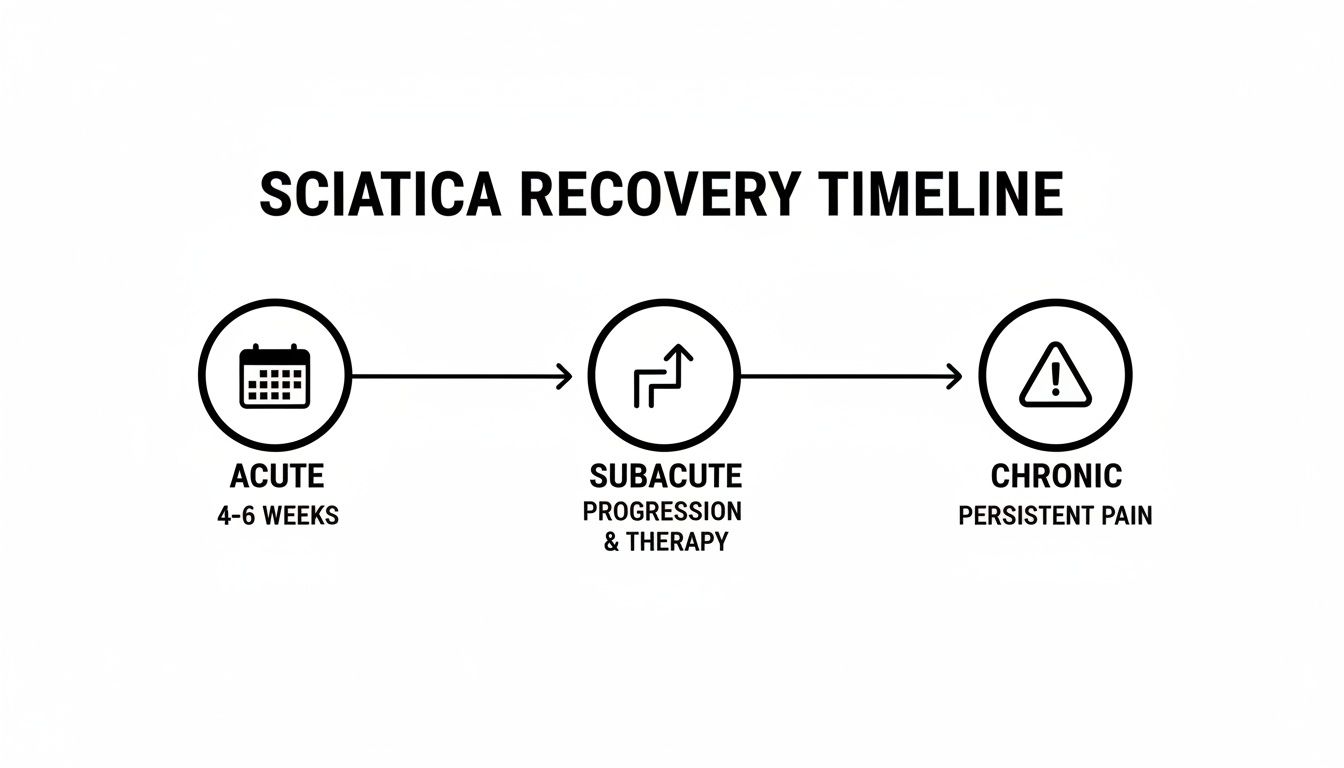
Here's a quick summary to keep things simple.
Sciatica Recovery Timelines at a Glance
This table breaks down the stages so you know what to expect and when.
| Sciatica Stage | Typical Duration | Common Outlook |
|---|---|---|
| Acute | 4-6 Weeks | Pain and inflammation are at their peak. The focus is on finding relief and calming the nerve. |
| Subacute | 6-12 Weeks | Intense pain lessens. The goal shifts to fixing the root cause with targeted therapy. |
| Chronic | 12+ Weeks | Pain is persistent. This requires a structured professional plan to avoid long-term issues. |
Ultimately, what you do during those first few weeks makes all the difference. Taking the right steps early on is the key to stopping a temporary flare-up from turning into a long-term problem.
Why Some Sciatica Pain Becomes Chronic
Most of the time, sciatica is a temporary, though intensely frustrating, problem. But sometimes, that short-term flare-up just doesn't go away. It lingers, becoming a stubborn, chronic issue that can disrupt your life.
This is the difference between acute (short-term) and chronic (long-term) sciatica. Think of it like a small fire. If you catch it early and use the right tools, you can put it out. But if it’s left to smolder, it can spread and become much harder to manage. The key to preventing a long-term battle is understanding why this shift happens in the first place.

From Acute Flare-Up to Chronic Condition
The journey from a passing pain to a chronic condition isn't something that happens overnight. It's a gradual process that occurs when the root cause of the nerve irritation—like a bulging disc or persistent inflammation—isn't properly addressed.
Chronic sciatica is the term we use when pain lasts for more than 12 weeks. After that much time, the nerve can become hypersensitive. It essentially learns to be on high alert, sending out pain signals even when there’s very little pressure on it.
While most people recover fairly quickly, about 30% of cases can linger for over a year. Research shows that only about 55% of individuals report overall improvement after 12 months, and the odds get worse for those who had leg pain for a longer initial period. You can discover more insights about sciatica recovery timelines and what those statistics mean for you.
Key Triggers for Chronic Sciatica
Several factors can raise your risk of acute pain turning into a chronic problem. Spotting them early can completely change your long-term outlook.
- Waiting Too Long for Help: The longer you wait to see a professional, the more established the inflammation and nerve compression become, making them that much harder to treat.
- Trying the Wrong Fixes: Doing the wrong stretches or activities can actually make things worse. You might think you're helping, but you could be aggravating the nerve and prolonging the problem.
- Severe Nerve Compression: In some cases, a large disc herniation or significant spinal stenosis creates pressure that simply won't resolve with basic home care.
- New Problems from Old Pain: When you’re in pain, your body naturally changes how it moves to compensate. This can create a whole new set of muscle imbalances and joint issues, locking you into a cycle of chronic pain.
When sciatica becomes chronic and starts to impact your ability to work, it's important to know what support is available. Understanding your benefits for long-term disability can provide crucial financial stability while you focus on a treatment plan to get your life back.
Key Factors That Influence Your Recovery Speed
That common 4-to-6-week recovery window for sciatica is more of a guideline than a guarantee. The truth is, your personal recovery speed depends on a few key things. Think of it less like a set timeline and more like a road trip—your route and speed can change based on the car you're driving, the road conditions, and how you handle the journey.
Understanding these factors will give you a much clearer picture of what your own path to feeling better might look like.
The Root Cause of Your Pain
Not all sciatica is the same. The specific reason your sciatic nerve is getting pinched or irritated is the single biggest factor in how long it will take to calm down. A simple muscle issue will resolve much faster than a major structural one.
Here are the most common culprits we see and what they mean for your recovery:
- Herniated or Bulging Disc: This is the big one. A small disc bulge might feel better within a few weeks, but a large herniation putting serious pressure on the nerve could take months to improve with consistent care.
- Spinal Stenosis: This is a narrowing of the spinal canal, which often happens as we age. Because it's a gradual, structural change, it usually requires a longer-term management plan to keep symptoms from coming back.
- Piriformis Syndrome: Sometimes, the problem isn't in your spine at all. The piriformis muscle in your glutes can tighten up and squeeze the sciatic nerve. Thankfully, this is often easier to fix with targeted stretching and therapy, bringing relief much more quickly. You can learn more about how simple tools can help with muscle tightness in our guide on the benefits of a PE foam roller.
Your Age and Overall Health
It's just a fact of life that our body's natural repair systems slow down as we get older. A 25-year-old might bounce back from a sciatic flare-up much quicker than a 65-year-old with the exact same issue.
Your general health also sets the stage for healing. Other health conditions, or comorbidities, can make sciatica more complicated and stubborn.
Conditions like diabetes can affect nerve health and circulation, making it harder for the nerve to heal. Inflammatory arthritis can also crank up the body's overall inflammation, which works against your efforts to calm the sciatic nerve down. A healthier body simply has more resources to put toward healing itself.
Lifestyle and Daily Habits
What you do every single day matters—a lot. Some habits can unknowingly work against you, acting like a foot on the brake pedal while you're trying to heal.
Take a hard look at these lifestyle factors:
- Sitting Too Much: Long hours spent sitting at a desk or in a car increase the pressure on your lower back discs. This can make the nerve compression worse and stall your recovery.
- Smoking: Nicotine is a real problem for healing. It constricts your blood vessels, slowing down the flow of oxygen and nutrients to the damaged tissues around your spine and nerve.
- Weight and Diet: Carrying extra body weight puts constant strain on your spine. At the same time, a diet full of processed foods can fuel inflammation, while a diet rich in whole foods and nutrients can help fight it.
When you’re dealing with the sharp, shooting pain of sciatica, just waiting for it to go away on its own can feel like torture. While some mild cases might clear up, taking a proactive approach with professional treatment is the surest way to shorten your recovery time.
It’s the difference between hoping a fire burns out and actively putting it out. A modern, integrated approach doesn’t just numb the pain; it gets to the root of the problem from several angles at once. Think of it like assembling a team of specialists, all focused on one thing: getting you better, faster.
Building a Stronger Foundation With Physical Therapy
Physical therapy is the cornerstone of lasting sciatica relief. This isn't about a quick fix. It's about rebuilding your body's natural support system to take the pressure off your sciatic nerve for good. A physical therapist acts like a personal coach for your spine, guiding you through specific movements that fix the underlying mechanical issues.
The primary goals of physical therapy for sciatica are:
- Core Strengthening: Building up your abdominal and back muscles creates a natural “corset” that stabilizes your spine, reducing strain on the nerve.
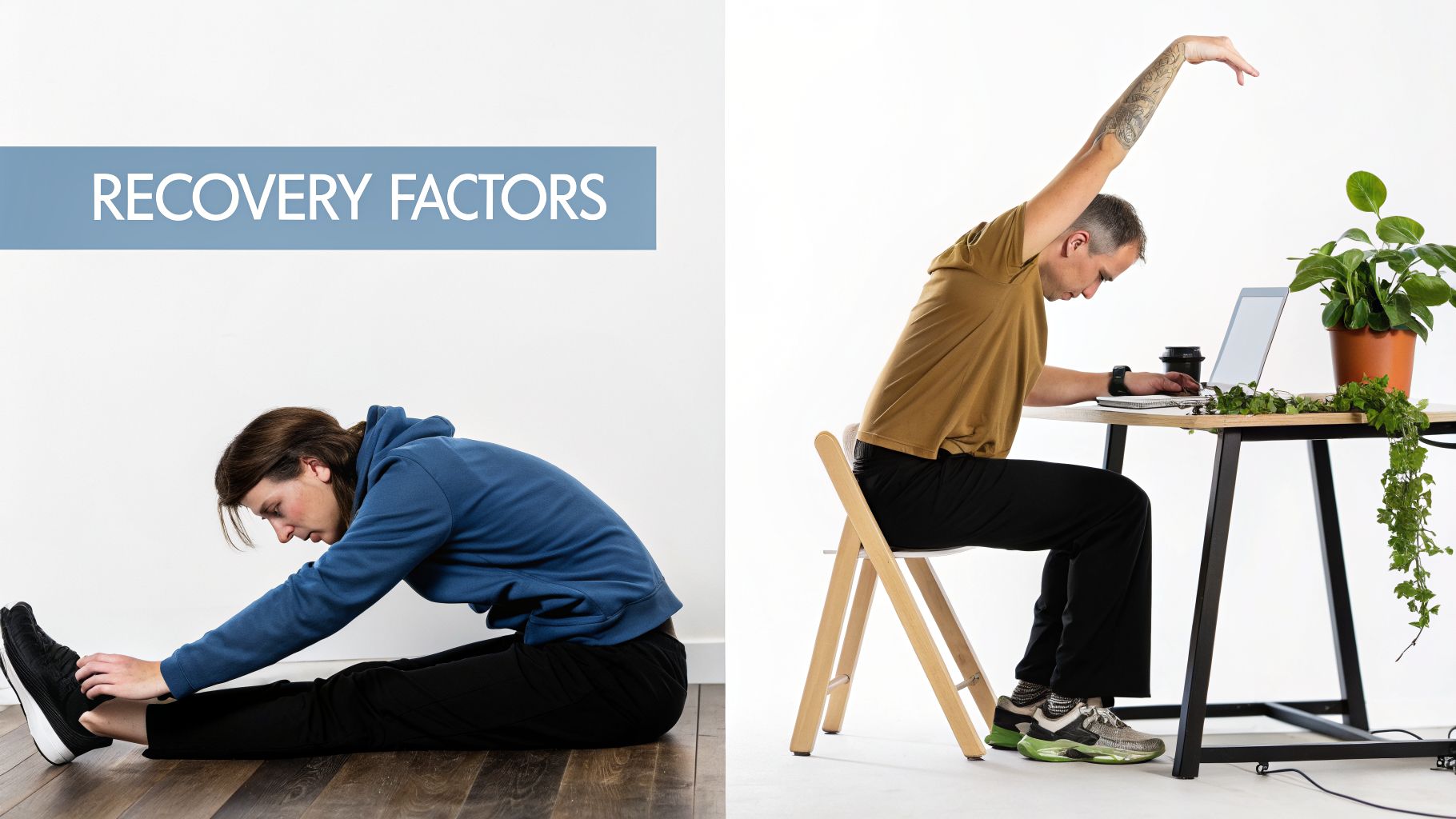
- Targeted Stretching: We use careful stretches to loosen up tight muscles—like the piriformis or hamstrings—that might be squeezing the sciatic nerve.
- Improving Posture: A therapist can spot and help you correct the postural habits that are contributing to your pain, which is key for long-term success.
By making your core stronger and improving your flexibility, you're not just easing today's pain—you're making your body more resilient to flare-ups in the future.
Providing Immediate Relief With Chiropractic Care
While physical therapy builds long-term strength, chiropractic care often delivers more immediate relief. If a misaligned vertebra or spinal compression is causing your sciatica, a chiropractor can use precise, gentle adjustments to take the pressure off the nerve.
Think of a pinched garden hose. A chiropractic adjustment is like unkinking that hose, allowing water (or in this case, nerve signals) to flow freely again. This can bring a significant drop in pain almost instantly.
This immediate relief is so important because it lets you start moving more comfortably, which makes it much easier to do your physical therapy exercises and speed up your entire recovery.
Advanced Therapies That Accelerate Healing
On top of these foundational treatments, modern rehab clinics often use advanced tools to give your body’s own healing processes a major boost. These therapies can really shorten the recovery timeline, especially for stubborn, chronic cases.
Here's a quick look at how different non-surgical options compare.
Comparing Sciatica Treatment Options
| Treatment | Primary Goal | How It Helps Sciatica | Best For |
|---|---|---|---|
| Physical Therapy | Long-term stability & strength | Builds core support, improves flexibility, and corrects posture to reduce nerve pressure. | Creating lasting relief and preventing future flare-ups. |
| Chiropractic Care | Immediate pain relief & alignment | Realigns the spine to decompress the sciatic nerve, often reducing pain right away. | Acute pain caused by spinal misalignments. |
| Acupuncture | Pain & inflammation reduction | Releases natural pain-relieving chemicals (endorphins) and improves blood flow to the area. | Reducing nerve inflammation and calming pain signals. |
| Shockwave Therapy | Tissue repair & regeneration | Uses sound waves to stimulate cell repair and break down scar tissue deep in the muscles. | Chronic, stubborn sciatica that hasn't responded to other treatments. |
Each of these treatments plays a specific role, and when combined, they create a powerful strategy for healing. For instance, acupuncture can reduce inflammation and make the area more receptive to healing, while shockwave therapy can kick-start the repair process in deep tissues that are hard to reach.
To see how targeted exercises and hands-on therapies fit together into a complete plan, you can learn more about how physical therapy helps with back and neck pain in our detailed guide. By attacking sciatica from every angle, you get faster relief that actually lasts.
When You Need to See a Doctor Immediately
Most of the time, sciatica gets better with a little patience and self-care. But some symptoms are your body’s version of a fire alarm—and you need to listen. Waiting it out in these situations can lead to permanent damage, so it’s critical to know when to act fast.
The biggest warning sign is a condition called Cauda Equina Syndrome. It's rare, but it's a true medical emergency. This happens when the bundle of nerves at the very bottom of your spinal cord gets severely compressed, and it requires immediate surgery to prevent lasting problems like paralysis.
Emergency Red Flags
If you experience any of the symptoms below, please go to an emergency room right away. Don’t wait to see if they improve on their own.
- Loss of Bowel or Bladder Control: This is the most urgent sign of Cauda Equina Syndrome. It could be an inability to urinate, trouble starting the flow, or not even feeling the sensation that you have to go.
- Saddle Anesthesia: This is a growing numbness in the areas that would touch a horse's saddle—your groin, buttocks, and inner thighs.
- Progressive Leg Weakness: If your leg starts to feel heavy, clumsy, or you find it harder and harder to lift. This also includes "foot drop," where you can't lift the front of your foot off the ground.
- Severe Pain After a Traumatic Injury: Intense sciatica that flares up immediately following a major fall, a car accident, or any other significant physical trauma.
These signs mean the nerve is under serious pressure, and the damage could become irreversible.
When to Schedule a Professional Consultation
Not every warning sign means a trip to the ER, but some are clear signals that it’s time to stop the wait-and-see approach and get a professional opinion. The question of “how long does sciatica last” takes a backseat to preventing a nagging issue from turning into a chronic one.
If your pain drags on for more than a few weeks, keeps getting worse even with self-care, or is making it hard to work or just get through your day, it's time to book a consultation.
At this point, you need a real diagnosis to figure out what's truly causing the pain. Getting the right imaging can be a key part of that puzzle. To understand what might be needed, you can learn more about when an MRI or an X-ray might be needed. A professional evaluation will get you out of the guessing game and onto a clear, structured path to feeling better.
Frequently Asked Questions About Sciatica Recovery

Even with a clear understanding of what sciatica is, you’re bound to have questions about the day-to-day realities of getting better. We hear them all the time in our clinic. Here are some straightforward answers to the questions our patients ask most often, designed to help you navigate your recovery with confidence.
Can Sciatica Go Away On Its Own?
It can, and often does. Many people with a mild, acute flare-up find their pain subsides within that typical 4 to 6-week timeframe, especially with a bit of rest and light movement.
But relying on time alone is a gamble. If you don't address the reason the nerve got irritated in the first place—like a disc issue or a deep muscle imbalance—there's a good chance the pain will be back. Getting professional guidance not only helps you feel better faster, but it also gives you the tools to keep it from happening again.
Is Walking Good For Sciatica?
For most people, yes, absolutely. It might feel counterintuitive, but gentle walking is one of the best things you can do. Staying in bed or on the couch can actually make stiffness and pain worse.
Walking gets blood flowing to the spinal structures, which helps reduce inflammation and keeps everything moving smoothly. The trick is to start slow with short walks on a flat surface and really pay attention to how you feel. If you notice a sharp spike in pain, that's your body's signal to pull back and rest.
Recovery Tip: Think of walking as gentle maintenance for your spine. It keeps the nerve from getting "stuck" and helps calm things down.
What Is The Fastest Way To Cure Sciatica?
There's no single "magic bullet," but the quickest path to lasting relief is almost always a combination of strategies. You need to calm down the immediate, painful symptoms while also fixing the mechanical problem that’s causing them.
For instance, a chiropractor might perform an adjustment to take pressure off the nerve for some quick relief. At the same time, a physical therapist can guide you through exercises that strengthen the muscles supporting your spine, making you more resilient for the long haul. This kind of integrated care tackles the issue from every angle for the fastest results.
How Should I Sleep With Sciatica?
The right sleeping position can make a world of difference. Your goal is to keep your spine in a neutral, relaxed line all night to avoid putting extra stress on the nerve. For a deeper dive into the specific signs of this condition, you can find great information on sciatica symptoms and relief.
Here are the two best positions to try:
- Back Sleepers: Slide a pillow under your knees. This little bit of elevation helps your lower back keep its natural curve, easing tension.
- Side Sleepers: Tuck a firm pillow between your slightly bent knees. This stops your top leg from sliding forward and twisting your pelvis and spine.
The one position to avoid at all costs is sleeping on your stomach. It flattens your spine's natural curve and makes you twist your neck, which can make sciatica pain much, much worse.
At MedAmerica Rehab Center, our team brings together physical therapy, chiropractic, and other advanced treatments to build a plan that's all about you. We focus on getting you out of pain and fixing the root cause so it stays away. If you're ready to stop waiting and start healing, contact us today to schedule a consultation and get back to your life.