
Constant Headaches From Neck Pain Explained and Solved
If you’re dealing with constant headaches that seem to come from your neck, you’re not just imagining the connection. The problem is often a cervicogenic headache, which is just a technical term for a headache that’s actually caused by an issue in your neck.
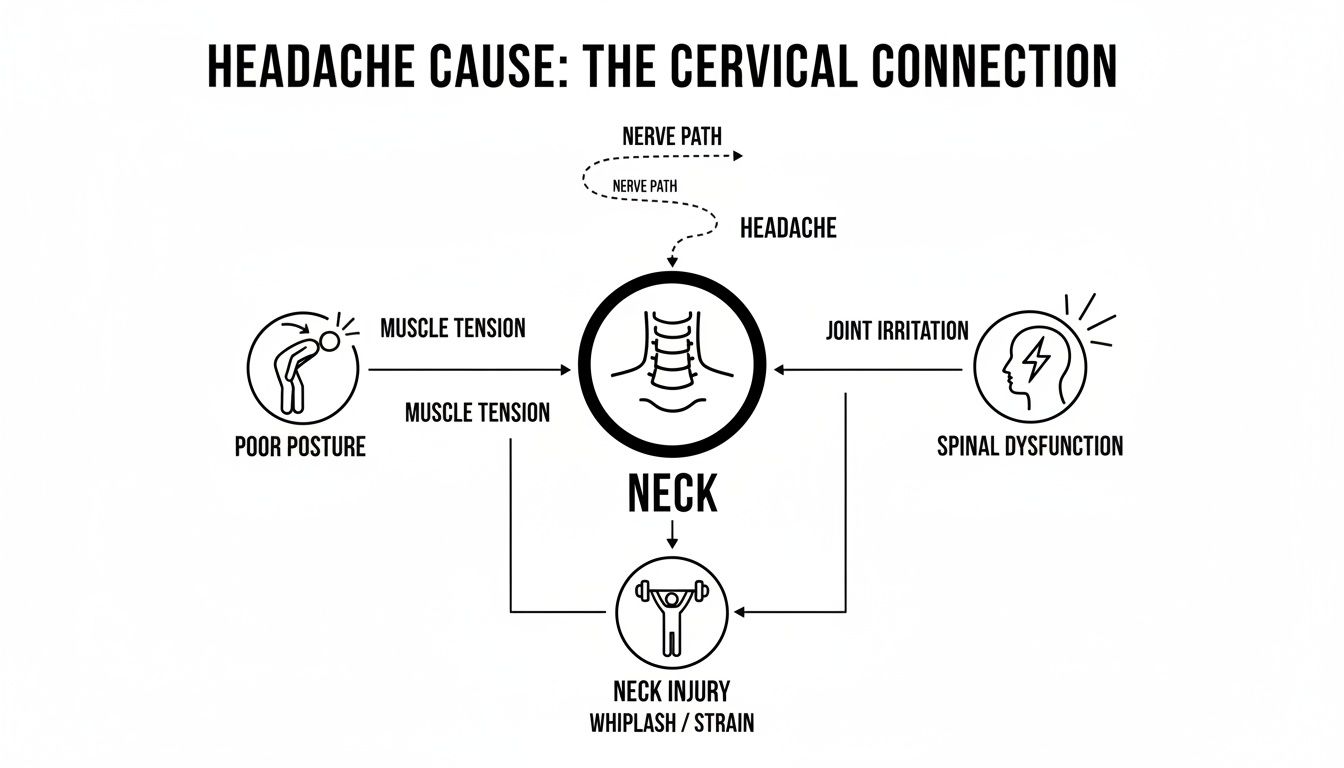
The pain you feel in your head is a classic case of referred pain. Think of it like this: the nerves in your upper neck are wired so closely to the nerves in your head that your brain can’t always tell the difference. When joints get stiff or muscles in your neck become tight, they irritate those shared nerves. Your brain gets the distress signal but thinks it’s coming from your head.
Understanding Why Your Neck Causes Constant Headaches
The root of the problem is in your cervical spine—the top seven vertebrae that support your head. This area is a busy intersection of bones, muscles, ligaments, and nerves. When the joints in your upper neck lose their normal motion or the surrounding muscles get knotted up from injury or poor posture, they can pinch or irritate this sensitive nerve network.
Because your brain isn’t great at pinpointing the exact source, it registers the irritation as pain somewhere else along that nerve’s path. The result? A headache that often starts at the base of your skull and creeps up one side of your head, sometimes settling behind your eye or at your temple.
Is Your Headache Coming from Your Neck?
Figuring out if your headache is truly starting in your neck is the first step toward getting the right kind of relief. While the symptoms can sometimes feel like a migraine or a tension headache, there are a few tell-tale signs to look for.
A key sign of a cervicogenic headache is that specific neck movements or holding a certain posture—like looking down at your laptop—will actually trigger or worsen the head pain. You might also notice that pressing on certain spots in your neck can reproduce your headache.
This is a direct cause-and-effect relationship. The problem is mechanical, and it’s happening in your neck, even if the pain is in your head.
Headaches are incredibly common, affecting roughly 40% of people worldwide—that's about 3.1 billion of us. A huge number of these headaches are linked back to neck problems. If you're curious about the bigger picture, you can read more about global headache disorder statistics on WHO.int.
To help you tell the difference, let’s compare the most common headache types side-by-side.
Cervicogenic Headache vs Other Common Headaches
Use this chart to spot the key differences in how these headaches feel and what brings them on.
| Symptom | Cervicogenic Headache | Migraine | Tension Headache |
|---|---|---|---|
| Pain Location | Usually one-sided, starting at the back of the head and moving forward. | Often one-sided but can be on both; frequently at the temples or forehead. | Typically feels like a tight band wrapped around the entire head. |
| Pain Type | A steady, non-throbbing ache or dull pressure. | A severe, pulsating or throbbing pain. | A dull, aching pressure or tightness. |
| Associated Symptoms | Limited neck movement, pain worsened by neck posture, shoulder pain. | Nausea, vomiting, extreme sensitivity to light and sound, visual auras. | Mild sensitivity to light or sound, but not extreme; no nausea. |
| Triggers | Specific neck movements, sustained awkward postures, pressure on the neck. | Hormonal changes, stress, certain foods, lack of sleep. | Stress, fatigue, poor posture, eye strain. |
While this table can point you in the right direction, a professional evaluation is always the best way to get a firm diagnosis and a treatment plan that actually works.
The Daily Habits That Trigger Neck Pain and Headaches

Most of the time, constant headaches from neck pain don’t come from one big, dramatic injury. Instead, they build up slowly, the result of small stresses from our everyday routines. These habits, repeated day in and day out, put a steady strain on your neck and lead to muscle tension, joint irritation, and eventually, that all-too-familiar headache.
Think of your neck muscles as small ropes holding up a bowling ball—your head. When you hold your head in an awkward position for too long, those ropes get pulled tight. After a while, they become tired, knotted, and inflamed, tugging on the bones in your neck and irritating the nerves that travel right up into your head.
The Rise of Tech Neck
One of the biggest culprits we see today is "tech neck." This is that forward-head posture where your head juts out in front of your shoulders. It happens after hours spent hunched over a laptop, tablet, or smartphone. What you might not realize is that for every inch your head drifts forward, it adds another 10 pounds of weight for your neck muscles to support.
This constant load compresses the upper part of your neck, a hotspot for headaches that start in the neck. The muscles at the base of your skull and in your upper back have to work overtime just to hold your head up. They get tight and form painful knots that refer pain directly into your head. Learning the proper sitting posture at your computer can take a huge amount of this strain off, often stopping these headaches before they even begin.
The Hidden Impact of Stress
Stress is another major trigger, and it's a sneaky one. When you feel anxious or overwhelmed, your body tightens up, getting ready for a "fight or flight" response. Your shoulder and neck muscles, especially the big trapezius muscles, clench up without you even noticing.
This constant muscle tension causes a few problems:
- Reduced Blood Flow: Tight muscles squeeze down on blood vessels, cutting off oxygen and allowing waste products to build up, which causes pain.
- Nerve Irritation: Tense, bunched-up muscles can press directly on sensitive nerves in the neck, firing off headache signals.
- Shallow Breathing: Stress often makes us breathe from our chest, using our neck and shoulder muscles instead of our diaphragm. This just adds to the tension.
It’s a powerful cycle. What starts as a mental or emotional burden quickly turns into a physical one, showing up as a stiff neck and a relentless headache.
Lingering Effects from Old Injuries
Sometimes, the real reason for today’s headaches is an old injury from years ago. A whiplash injury from a car accident or even a bad fall can create lasting problems in your neck, even if you thought you had fully recovered.
Whiplash doesn't just stretch muscles; it can cause tiny tears in ligaments and knock the small joints in your neck out of alignment. This can lead to long-term instability and inflammation, making the area sensitive to irritation from just normal, daily activities.
Even injuries that seemed minor at the time can create scar tissue and change how you move. Over the years, these subtle changes can contribute to wear and tear that ultimately causes constant headaches from neck pain. Globally, neck pain is a massive issue; in 2019 alone, there were 47.5 million new cases, making it a leading cause of disability.
Getting to the bottom of these old mechanical problems is often the key to finally breaking the cycle of pain. If you're looking for ways to get started at home, check out these https://www.medamericarehab.com/here-are-easy-exercises-you-can-do-at-home-to-improve-your-posture/.
Knowing When to See a Professional for Your Headaches

While stretches and self-care are a fantastic starting point, sometimes they just aren't enough to break the cycle of constant headaches from neck pain. It’s important to know when your body is telling you it's time to call in an expert.
If your headaches are getting worse, not better, that’s a clear signal. A good rule of thumb is this: if the pain disrupts your life, work, or sleep for more than a couple of weeks, a professional evaluation is the right next step. Ignoring these signals can often lead to a much longer and more frustrating recovery down the road.
Red Flag Symptoms That Need Immediate Attention
Most headaches are just that—headaches. They aren't emergencies. But in rare cases, a headache can be a sign of a more serious issue that needs prompt medical attention.
If you experience a headache along with any of the following symptoms, it's critical to see a doctor right away to rule out other causes and ensure your safety.
- A "Thunderclap" Headache: This is a sudden, explosive headache that feels like the "worst headache of your life," reaching peak intensity in less than a minute.
- Headache with Fever or Stiff Neck: When a headache shows up with a high temperature and a stiff, painful neck, it can be a sign of a serious infection.
- Sudden Numbness or Weakness: Any headache accompanied by numbness, weakness, or paralysis on one side of your body or face requires immediate evaluation.
- Vision Changes or Confusion: Headaches that bring on blurred vision, slurred speech, confusion, or sudden personality changes are a major concern.
- Headache After a Head Injury: Any new or worsening headache that develops after a fall or a blow to the head should always be checked out by a professional.
This isn't meant to cause alarm, but to empower you. Recognizing these red flags allows you to be proactive. Getting immediate care ensures any serious issues are handled quickly, which clears the way for a safe and effective plan for your neck-related headaches.
What to Expect During Your First Visit
Walking into a clinic for the first time can feel a little intimidating, but knowing what to expect can ease your mind. The goal of that first appointment is simple: find the root cause of your pain. We aren't just trying to mask the symptoms; we’re working to solve the puzzle of your unique pain.
This thorough diagnostic process is the foundation for any successful treatment. It all starts with a conversation.
A Comprehensive Diagnostic Approach
We’ll start by listening. We want to hear your story—when the headaches began, what they feel like, what you’ve noticed makes them worse, and if anything at all brings you relief. This history is one of the most valuable tools we have.
Next comes the hands-on physical exam. Your therapist will assess:
- Your Posture: We’ll look at how you naturally sit, stand, and hold your head.
- Range of Motion: We’ll gently test how far and in which directions you can comfortably move your neck.
- Muscle Strength and Tension: We'll feel for knots, tightness, and weakness in the muscles of your neck, shoulders, and upper back.
- Nerve Function: Simple tests for reflexes and sensation help check that your nerves are functioning properly.
This hands-on approach lets us pinpoint exactly which joints are stiff or which muscles are referring pain to your head. By carefully recreating your symptoms with specific movements or gentle pressure, we can confirm the link between your neck and your headaches. This ensures your treatment plan targets the true source of the problem right from the start.
At-Home Strategies for Immediate Neck Pain Relief
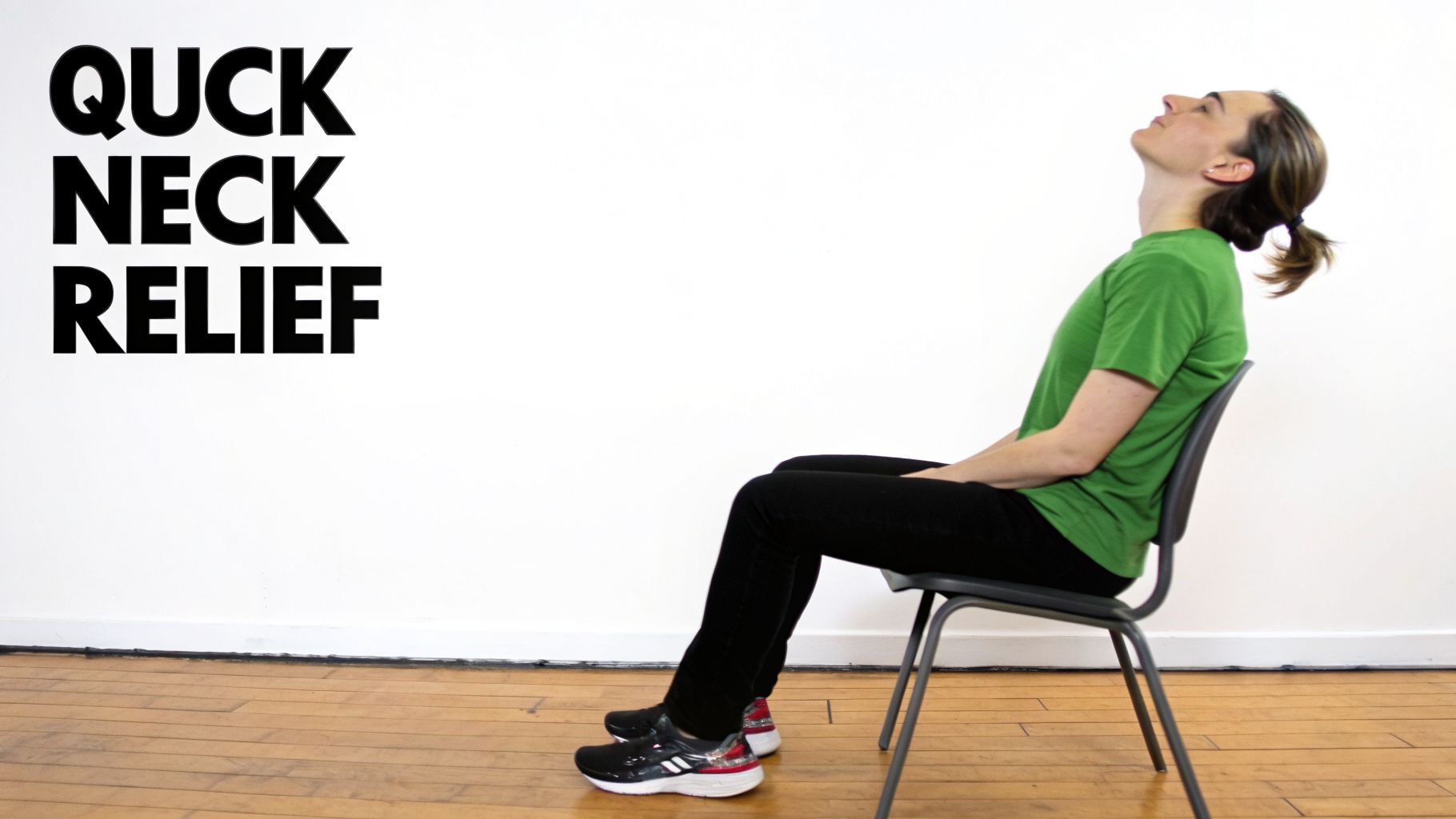
When a headache strikes and you know it’s coming from your neck, you just want it to stop. The good news is you don’t have to simply wait it out. There are some simple, effective things you can do right at home to calm those angry muscles and joints.Think of these strategies as your first line of defense against constant headaches from neck pain. They can provide real relief and give you a solid foundation as you figure out the next steps in your treatment.
Gentle Stretches to Ease Neck Tension
The key here is to be gentle. You’re trying to coax tight muscles to relax, not force them into a deep stretch. Every movement should be slow, controlled, and completely pain-free. If you feel any sharp pain, stop immediately.
Here are a few safe stretches to get you started:
Chin Tucks: This is the perfect antidote to “tech neck.” While sitting or standing tall, gently glide your chin straight back, like you’re making a double chin. You should feel a nice stretch at the base of your skull. Hold for 3-5 seconds and do about 10 repetitions.
Upper Trapezius Stretch: Sit in a chair and grab the side of the seat with your right hand to anchor your shoulder. Now, gently tilt your left ear toward your left shoulder until you feel a mild pull on the right side of your neck. Hold that for 20-30 seconds, then repeat on the other side.
Levator Scapulae Stretch: This one targets that nagging knot many people feel at the top of their shoulder blade. Turn your head about 45 degrees to the left, then gently bring your chin down toward your left armpit. For a little extra stretch, you can use your left hand to apply very light pressure to the back of your head. Hold for 20-30 seconds before switching sides.
Optimizing Your Environment for Relief
Sometimes, the smallest changes in your daily environment can make the biggest difference. Your workspace and your bed can either be a source of strain or a source of relief.
Ergonomic Workspace:
- Monitor Height: Position your screen so the top is at or just below your eye level. Your head should feel neutral—not tilted up or down.
- Chair Support: A good chair that supports your lower back helps your whole spine stack up correctly, taking a lot of pressure off your neck.
- Take Breaks: It's so important to move! Set a timer to remind yourself to get up every 30-45 minutes. Even a quick walk around the office can keep your muscles from getting stiff.
Sleep Position:
Sleeping on your stomach is one of the biggest culprits behind neck pain and morning headaches because it forces your neck into a twisted position for hours. Try sleeping on your back with a pillow under your knees or on your side with a pillow between your knees. Both positions help keep your spine in a much happier, more aligned state.
A Simple Routine for a Healthier Neck
Building small, consistent habits into your day is the best way to prevent neck strain before it starts. This simple routine helps counteract the daily grind and keeps your neck muscles relaxed and supported.
| Daily Routine for Neck Pain and Headache Prevention |
| :— | :— | :— |
| Time of Day | Activity | Benefit |
| Morning | Gentle neck stretches (like Chin Tucks) | Wakes up muscles and relieves overnight stiffness. |
| Mid-Day | Quick ergonomic check and a short walk | Prevents slouching and muscle fatigue from sitting. |
| Evening | Apply a warm compress for 15 minutes | Relaxes muscle tension accumulated during the day. |
| Before Bed | Check pillow and sleep on back or side | Ensures a neutral spine position for restorative rest. |
Following a simple checklist like this doesn't take much time, but it pays off by reducing the frequency and intensity of neck-related headaches. It's all about creating an environment where your neck can thrive.
Using Temperature Therapy to Your Advantage
Heat and ice are classic, powerful tools for managing pain. The trick is knowing which one to use and when.
For a new, sharp flare-up where things feel inflamed, cold is your best friend. For that chronic, deep stiffness and muscle ache, heat is usually the way to go.
Cold Therapy: An ice pack is great for reducing inflammation and numbing the area, giving you relief from that acute, throbbing pain. Just apply it for about 15 minutes at a time. If you want to learn more, our guide to using an ice pack in physical therapy has more great tips.
Heat Therapy: A warm compress, hot water bottle, or even a hot shower can get blood flowing, which helps relax tight muscles and soothe achy joints. Some people find that using a sauna for pain relief offers a deeper, more penetrating warmth that eases the chronic tension behind their headaches. Use heat for 15-20 minutes at a time.
How Professional Treatments Provide Lasting Relief
When the ice packs and daily stretches stop working, it's frustrating. If the relief only lasts an hour or two, it’s a clear signal that the real source of your constant headaches from neck pain isn't being addressed.
Professional treatment isn't about chasing symptoms. It's about figuring out why those pain signals are being sent to your head and fixing the root cause.
Think about it like a car with bad alignment. You can keep replacing the worn-out tires, but they’ll just wear out again until a mechanic fixes the alignment. We act as that mechanic for your body, correcting the underlying issues in your neck so the problem doesn’t keep coming back. By combining different therapies, we can tackle your pain from every angle for real, lasting relief.
The Power of Physical Therapy
Physical therapy is the cornerstone of building a strong, stable neck that doesn’t cause headaches. It’s not just about doing exercises; it’s a guided process focused on both immediate relief and long-term prevention. Your physical therapist is like a personal coach, teaching you how to move correctly and build strength in the right places.
We often start with hands-on manual therapy to gently ease stiff joints and release that deep, stubborn muscle tension. From there, we build a personalized exercise plan to:
- Strengthen Deep Neck Flexors: These are tiny but mighty muscles at the front of your neck. Keeping them strong is the secret to fighting that forward-head "tech neck" posture.
- Improve Scapular Stability: When the muscles around your shoulder blades are strong, they provide a solid foundation for your neck, taking a huge amount of strain off those smaller, overworked muscles.
- Restore Healthy Movement Patterns: We’ll help you break the old habits that trigger pain and retrain your body to move in a healthier, more efficient way.
This is far from a generic handout of exercises. We pinpoint your specific weaknesses and give you the exact tools to fix them. You can learn more about this in our guide on how physical therapy helps with back and neck pain.
Restoring Alignment with Chiropractic Care
If physical therapy is about retraining your muscles, chiropractic care is about making sure the bones they attach to are in the right place. The small joints in your neck can easily get "stuck" or misaligned from injuries or years of poor posture, which can directly pinch and irritate the nerves that cause headaches.
A chiropractor uses gentle, specific adjustments to get these joints moving properly again. This creates a powerful one-two punch:
- It provides immediate relief by taking pressure off the irritated nerves.
- It allows the tense, guarded muscles around the joint to finally relax, breaking the cycle of pain and tightness.
By ensuring your neck's bony framework is correctly aligned, chiropractic care creates the ideal state for your muscles to work properly. This makes your physical therapy exercises more effective and helps your body maintain good posture without a fight.
Acupuncture for Pain and Tension Release
Acupuncture gives us another powerful tool to calm the pain and muscle tension that drive these constant headaches. It works by targeting specific points in the body to interrupt pain signals and convince tight, knotted-up muscles to let go.
Imagine a muscle that’s knotted up like a clenched fist. Acupuncture can help that "fist" unclench, releasing the stored tension. This process also cues your body to release its own natural pain-killers, like endorphins, creating a deep sense of calm. It's especially good at deactivating trigger points—those nasty little knots in your neck and shoulders that are notorious for shooting pain up into your head.
Advanced Healing with Shockwave Therapy
For those really stubborn cases where chronic inflammation or old scar tissue is holding you back, Shockwave Therapy can be a game-changer. This non-invasive treatment sends acoustic waves deep into the tissue to kickstart a powerful natural healing response.
Essentially, it helps break down restrictive scar tissue, floods the area with fresh blood flow, and accelerates the repair of damaged muscles and ligaments. It helps the body heal itself, faster.
Combining these treatments is far more effective than using just one. It's a true team approach: physical therapy builds a strong foundation, chiropractic care aligns the structure, and acupuncture and shockwave therapy manage pain while speeding up healing. This integrated strategy gets to the root cause of your headaches for good.
Your Next Steps Toward a Headache-Free Life
You now know how problems in your neck can trigger headaches, the daily habits that feed the cycle, and the powerful treatments that can stop it. If there’s one thing to take away, it’s this: constant headaches from neck pain are treatable. You don’t have to just live with it.
Taking that first step can feel like the hardest part, but it's the only way to break the cycle of pain, temporary relief, and then more pain. Finding and correcting the root cause is the key to lasting freedom from chronic headaches.
How to Get Started at MedAmerica Rehab
We get it. When you're in pain, you just want to feel better, fast. Here in Deerfield Beach, our entire goal is to give you a clear diagnosis and a straightforward recovery plan built around you.
Here’s how to schedule your first visit:
- Call Our Office: Just give our front desk a call to find a time that works. We keep same-day appointments open because we know pain doesn’t wait.
- Bring What You Have: If you have any notes about when your headaches happen, past injuries, or old reports like X-rays or MRIs, bring them. The more clues we have, the faster we can solve the puzzle.
- Wear Comfortable Clothes: Part of your first visit will be a physical assessment of your posture and how your neck moves. Wear something that lets you move easily.
What to Expect From Your Comprehensive Assessment
Your first appointment is all about us listening to your story. We’ll sit down with you and go over your health history and the details of your headaches.
This isn't a quick, five-minute check-up. We perform a detailed physical exam, checking your neck’s range of motion, looking for muscle tension, and testing joint function to find exactly what’s causing your pain. This is what allows us to build a plan that actually works.
Based on what we find, we’ll explain everything in simple terms. We’ll outline the best path forward, whether that’s physical therapy, chiropractic adjustments, or a mix of treatments. You’ll leave that first appointment with a clear understanding of your condition and a concrete plan to get relief. It’s time to stop putting up with the pain and start your journey back to enjoying life.
Your Questions About Neck Pain and Headaches, Answered
It's completely normal to have questions, even after you've decided to tackle your headaches. Getting straight answers can help you feel confident that you’re on the right path.
What's the Difference Between a Cervicogenic Headache and a Migraine?
The biggest difference is where the pain actually starts. A cervicogenic headache is a classic "referred pain" problem. The issue—like a stiff joint or a knotted muscle—is in your neck, but your brain makes you feel the pain in your head.
A migraine, on the other hand, is a neurological condition. It’s rooted in your brain chemistry and often has a genetic link.
- Cervicogenic Headache: Think of this as a mechanical issue in your neck. Moving your neck a certain way will often trigger or worsen the headache.
- Migraine: This usually brings on a whole different set of symptoms, like extreme sensitivity to light and sound, nausea, and a deep, throbbing pain that feels like it's inside your skull.
How Long Does It Take to Get Better?
This is the big question, and the honest answer is: it depends. Every person’s body and history is different. Some people feel a dramatic change after just a few physical therapy or chiropractic sessions. For others, especially if the problem has been around for months or years, it might take several weeks to fully release tension and retrain the muscles.
The most important factor is consistency. The sooner you start addressing the real source of the problem, the faster your body can begin to heal, and the quicker those headaches will start to fade.
It’s important to understand that most persistent post-injury symptoms, including headaches, are unlikely to resolve on their own after the first 3-6 weeks. Targeted professional treatment is often necessary to break the cycle of pain for good.
Is Bad Posture the Only Thing to Blame?
Bad posture, especially the "tech neck" we see so often now, is a massive contributor, but it’s rarely the whole story. While hunching over a screen puts a constant, low-grade strain on your neck, other factors can be just as important.
An old whiplash injury that never fully healed, underlying arthritis in the neck joints, or even high levels of chronic stress can be the primary trigger. A thorough evaluation is the only way to figure out what’s driving your specific pain.
At MedAmerica Rehab Center, our team is here to give you clear answers and create a personalized plan to get you out of pain. Don't let headaches run your life another day—schedule your comprehensive assessment with us today.